Geologists call it the Ukrainian shield. That land in the middle which starts from the northern border with Belarus up to the shores of the Azov Sea, in the south of Donbass. According to the studies of the Ukrainian geological service, in the ancient rocks of this shield are hidden lithium deposits with great potential. Findings that have been identified mainly around the area of Mariupol, the port city of Donbass torn apart by Russian bombing.
Lithium deposits
Lithium deposits in Ukraine
“This may not be the main reason for the invasion, but undoubtedly Ukraine's mineral wealth is one of the reasons why this country is so important to Russia,” said Rod Schoonover, former director of the Environment and Natural Resources Section of the U.S. National Intelligence Council. A wealth confirmed by the fact that Ukrainian lithium had begun to attract global attention as early as last year, before the Russian invasion halted exploration. Last November, in fact, the Australian company European Lithium said it was close to securing the rights to two promising deposits of lithium in the region of Donetsk (eastern Ukraine) and Kirovograd, in the center of the country. In the same month, the Chinese company Chengxin Lithium has also asked for the rights on some deposits, a move that would allow China to win the first deposit in Europe. “Since there are no developed deposits, I highly doubt that lithium resources are the motivation for attacks in the Southeast,” Schoonover tells Renewable Matter. “But if this region falls under Russian control, lithium reserves would certainly be a co-benefit for the Kremlin. Certainly the rest of the world would have a say. It would not import lithium from a pariah state (a nation that is not recognized by the governments of other countries due to human rights violations), especially when there are better alternatives in geopolitically more favorable countries.”
Nothing is thrown away of pegmatitic rocks
One of the few geologists to have seen these ancient rocks is Andrea Dini, a researcher at the ItalianCNR's Institute of Geosciences and Georesources, who participated in three campaigns at the Khoroshiv-Volodarsk mine in northern Ukraine. “The mine I saw never produced lithium, because its rocks contain lithium minerals (zinnwaldite, trilithionite and polylithionite) that contain fluorine,” Dini tells Renewable Matter, “and are problematic for the metallurgical processes of extracting the metal. Since 1991, Ukrainians here have been extracting mostly precious stones.” Over the past two decades, however, the Ukrainian Geological Survey has conducted scientific and strategic research, identifying several areas with lithium minerals such as spodumene with very high potential. “The very ancient rocks that lithium producers are interested in are pegmatites containing spodumene (lithium aluminum silicate), the mineral preferred by industry,” explains Dini. “These rocks do not have polluting metals such as lead, zinc and cadmium, but they contain silicates (quartz, feldspar) that as waste material can be sold to the ceramic industry.” In short, of pegmatites, nothing is thrown away. According to the researcher, Ukraine and Serbia probably have the greatest potential for extracting lithium in all of Europe.
The other mineral resources in Ukraine
Ukraine has 10% of the world's iron reserves, 6% of titanium and 20% of graphite. “In geology, this extremely flat region is called peneplain,” Andrea Dini points out, “because it is so ancient that it has been flattened by erosion. Many of the rocks are billions of years old and you don't see them on the surface because they are covered by layers of sediment.” There are more than just minerals in Ukraine, however. In the north east, near the Russian border, there is a 400-million-year-old sedimentary basin filled with organic material and black shalerocks. “These are black slates with large amounts of coal and methane. For example, part of US energy independence is due to the extraction of methane (Shale Gas) from these rocks on US soil.” There is also another sector that has a close link with Ukraine's resources: Italian ceramics. The ceramic industrial district of Sassuolo is one of the most important in the world and the quality of its tiles also depended on the importation from Ukraine of clay and kaolin, a mineral that is extracted from the quarries of Donbass. In the Italian ceramics industry, 25% of raw materials – including clay considered prized – came from Ukraine. After the Russian invasion, companies in the district will have to find compatible and competitive alternatives. According to insiders, first of all they need to find another recipe, that is, a new mixture of clays, kaolins and feldspars with material imported from other countries.
Hamed Esmaeilion has to watch his back wherever he goes — unable to escape the oppressive and violent regime that rules his homeland of Iran, even when he’s in Canada.
When he first arrived in 2010 with his wife Parisa and daughter Reera, Esmaeilion thought he had come to the safest country in the world.
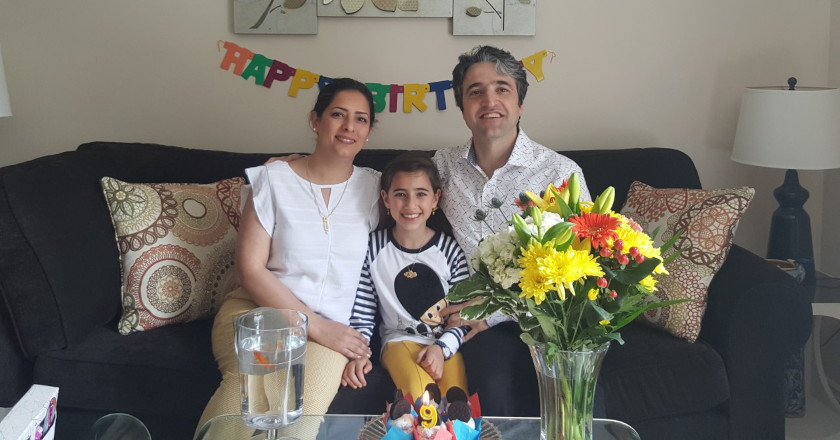
Hamed Esmaeilion with wife Parisa and daughter Reera on her ninth birthday. Courtesy Hamed Esmaeilion
His wife and daughter were among 176 people killed, including 55 Canadian citizens, when the Islamic Revolutionary Guard Corps (IRGC) shot down Ukraine International Airlines Flight 752 on Jan. 8, 2020. That shattered any illusions the Ontario man had that his family would live happily ever after in Canada.
“Where is my wife and my daughter now? They’re buried in the cemetery in Richmond Hill, just because of the Islamic Republic of Iran,” says Esmaeilion, who has channelled his profound grief into action, demanding answers and accountability for the loss of his loved ones.
Soon, the watchful eyes of the regime focused on him in Canada. He started to get threats on social media, and even more chilling, multiple phone calls from the same person.
Canada to hold Iran’s IRGC accountable following calls to list regime as a terrorist group: Trudeau
“The last conversation I had with that guy, he was like, let’s talk about the last moments of your wife and your daughter.”
He says the worst part is, he was told police resources are stretched too thin to protect him.
“I had (a) conversation with RCMP officers in January and I said, do you have any recommendations for me because I see the threats are going on, especially social media, and they said to me that they have no resources. They’re busy with Ukraine, Russia, China.”
As revealed during a lengthy investigation by Global News’ current affairs program The New Reality, the threats against Esmaeilion are not unusual for critics of the Islamic Republic, especially among the Iranian diaspora in Canada.
Protesters in Vancouver hold up signs of loved ones killed by the Islamic Republic of Iran, Sept. 16. Pat Bell / Global News
In fact, The New Reality heard from Iranian Canadians, legal experts, and security and intelligence sources who say Canada has an especially big problem with hundreds, maybe thousands, of potentially dangerous regime-connected officials here on Canadian soil.
“Islamic Republic agents are everywhere in this country. Everywhere,” Esmaeilion says.
Canada is ‘a haven for Islamic Republic agents’ warns Iranian human rights activist
Prominent Iranian American journalist and human rights activist Masih Alinejad tells The New Reality she was given a bone-chilling warning from the FBI: don’t travel to Canada.
“That’s heartbreaking. Canada should be safe,” Alinejad says.
Alinejad is no stranger to threats.
Exiled in 2009, she has long been a thorn in the Islamic Republic’s side, calling the compulsory hijab their ‘Berlin Wall.’ Her criticism has put her in extreme danger.
Masih Alinejad flexes her bicep tattooed in Farsi with “Woman, Life, Freedom” — a movement Alinejad forced the world to pay attention to, in defiance of Tehran’s violent suppression of women and girls. Ed Nescot for Global News
In 2021, the FBI thwarted an alleged kidnapping plot against Alinejad — and the following year, an alleged assassination attempt. The FBI said both plots were linked to the Iranian regime. One of the suspects, Khalid Mehdiyev, was caught on surveillance video outside Alinejad’s Brooklyn home, and police say they found a loaded AK-47 in his car. In the indictment, authorities say Mehdiyev travelled to the house “repeatedly.” Mehdiyev pleaded not guilty in February.
Since the alleged assassination plot was thwarted, Alinejad been under police protection, moving from safe house to safe house in New York City. She’s in danger, but she’s protected.
Canada is another matter altogether.
“FBI told me that as far as you are in America, we will protect you. But we suggest you not to go to Canada. It won’t be safe for you.”
Gabriel Noronha served as special advisor on Iran to the U.S. State Department from 2019 to 2021. His assessment of the Islamic Republic’s presence in Canada is blunt.
“What I constantly hear from Iranian Americans, they say the problem in Canada is far, far worse than you can imagine,” Noronha says.
Alinejad told The New Reality that if she absolutely insists on travelling to Canada, the FBI advised her it would need months to arrange her security.
Noronha says that threat assessment is more consistent with the preparations necessary to visit countries in the Middle East where Iranian affiliates are known to operate freely.
“That sounds like if she were going to Turkey or Iraq. It shouldn’t be the case that when you’re going to Canada that you have to spend months in advance making sure that you’re going to be safe,” he says.
And there have been troubling threats in Canada.
As reported by Reuters in November 2022, Canada’s spy agency, the Canadian Security Intelligence Service (CSIS), said it was investigating reports of “credible” death threats from Iran against Canadians.
In 2021, the FBI indictment against Alinejad’s alleged kidnappers said three individuals were targeted in Canada but they were not identified, and no reference was made to their respective professions. The indictment did, however, identify those targeted as being critical of Iran.
Alinejad revealed more troubling information about the danger facing Iranian Canadian dissidents, in yet another bombshell revelation: “The FBI told me that the same group who are trying to kidnap me on U.S. soil that were the same group from Revolutionary Guards in Iran trying to harass, kidnap and kill Canadians.”
Alinejad carries a lot of guilt that she is protected while Iranian Canadian dissidents like Esmaeilion don’t get the same kind of security she does.
“They send death threats to Hamed and many other activists. Why? Because they don’t see any consequence,” Alinejad says.
Hamed Esmaeilion says he received threatening messages online and over the phone. He has been in touch with the RCMP, who, he says, told him they don’t have the resources to help him because ‘they’re busy with Ukraine, Russia, China.’. Jory Lyons for Global News
From constant threats on social media to phone calls, Esmaeilion knows he is at risk.
“If something happens to me, nobody can help me. So you feel helpless.”
And just this last August, only a few months after The New Reality first interviewed Esmaeilion, the reason for that vulnerable feeling was hammered home like never before.
A former senior Iranian minister, Seyed Hassan Ghazizadeh Hashemi, is believed to have visited Canada, having been spotted in the background of a TV news report on Quebec tourism, and then caught on video visiting Casa Loma in Toronto.
He was Iran’s health minister from 2013 to 2019 under then-president Hassan Rouhani, the head of the same administration responsible for killing Esmaeilion’s family and 53 other Canadians.
Esmaeilion saw that footage on social media and couldn’t believe it. He was furious that Hashemi was apparently allowed to roam the country freely, visiting tourist sites in Montreal and Toronto. There are reports he was also spotted in Vancouver.
“It was outrageous for the whole community,” he says.
Esmaeilion called out the Canadian government and also contacted the RCMP.
“He was not an ordinary person. You see that he had a photo with Hassan Nasrallah, the leader of Hezbollah, which is a terrorist organization in this country.”
In response to Esmaeilion’s calls to have him deported, Hashemi reportedly fired back with a threat. He was quoted in an Iranian magazine saying: “I will retaliate against the treachery of the foreign media outlets and Hamed Esmaeilion.”
“It was direct threats and it was outrageous,” Esmaeilion says. “It was. And it made me angry, actually. Why is he here and he threatens everybody he wants?”
Hashemi did not respond to The New Reality when asked for comment on his trip to Canada and his alleged threat to Esmaeilion.
In late August 2023, Canada’s Immigration Minister Marc Miller finally weighed in. Miller posted on X, formerly known as Twitter, that Hashemi’s application for temporary residence was denied under the Immigration and Refugee Protection Act (IRPA), citing that he was barred for three years due to “Iran’s disregard for human rights.”
“That’s a totally unserious response,” U.S. security expert Gabriel Noronha says.
“In three years, you can go on vacation in the rest of Europe and then come back to Canada an unchanged man. The issue is, this person should be permanently blocked and every other Iranian official like him should be permanently blocked.”
Even an immigration lawyer like Ramin Joubin can’t figure out how Hashemi was allowed to enter in the first place.
“You know, I really can’t say how that guy got in. I really can’t say. So it boggles my mind, too, how that individual got into Canada. I don’t know,” Joubin says.
“I think that it’s just a slap in the face to the community here.”
The debacle even caught the attention of Iranian state TV, which openly mocked Canada’s permissive immigration system in a news piece.
During the segment, the anchor said in Farsi that “the Canadian system, as you know, is such that you first can get a visitor visa. You get there and start working, then (permanent) residence, and you will be in the company of folks like Mr. (Mahmoud Reza) Khavari and all the others there.”
The Iranian state TV anchor was referring to one of the first cases of someone linked to the Iranian regime in Canada: Mahmoud Khavari.
Khavari was the CEO of Iran’s national bank, known as Bank Melli. He reportedly fled to Canada in 2011 after being accused of embezzling $2.6 billion.
Khavari has been wanted by Interpol since 2016. In 2017, he was sentenced in absentia to 30 years in jail in Iran.
Despite all of this, he reportedly became a Canadian citizen and according to reports on social media, Khavari and his son set up a successful restaurant chain in Toronto, even garnering positive coverage in the process, to the disgust of activists like Alinejad:
Before Khavari left Iran for Canada, he reportedly penned a resignation letter, in which he insisted that his bank was not directly involved in the scheme. According to the same news reports, he also apologized to Iran’s supreme leader and the Iranian people, claiming he was resigning “out of respect.”
In another infamous case, a video of a retired Islamic Revolutionary Guard Corps commander working out at a gym in Toronto went viral in January 2022, angering Iranians all over the world.
Morteza Talaei, a former second brigadier general with the IRGC, was also the head of the Tehran police force when Iranian Canadian photojournalist Zahra Kazemi was beaten to death in custody in 2003.
Kazemi, who had a permit to film, was arrested after taking photos of Iran’s notorious Evin Prison, where protests were taking place over students detained by the regime.
Candlelight vigil by Iranian journalists to condemn the in-custody death of Zahra Kazemi, August 2003. Behrouz Mehri/AFP via Getty Images
It wasn’t until 2022, almost 20 years after Kazemi’s death, that the Canadian government took action against Talaei and sanctioned him under the Special Economic Measures Act for gross and systemic human rights violations.
That result came only after the government was called out on social media and by many famous activists, like Masih Alinejad.
Alinejad was outraged that the government of Canada gave someone like Talaei a visa in the first place, referring to Canada as the backyard playground for the Islamic Republic.
For many in the Iranian diaspora, Canada’s permissiveness with wealthy Iranians connected to the regime, people who are sometimes even personally involved in acts of brutality, has become a recognizable and troubling pattern.
“I don’t know how when it comes to all the killers, when it comes to Islamic Republic officials, suddenly Canada abandons Iranian people and opens the doors toward all these barbaric mullahs and barbaric officials,” says Alinejad, clearly frustrated.
“How? How?”
Alinejad wants all Canadians to wake up to this reality.
“Maybe you think that this is some problem with Iranians. ‘Let them deal with it.’ It’s not. The Islamic Republic is a threat to Canadians.”
As The New Reality discovered, it’s not just a few isolated cases. This is a major problem, and it’s happening across the country.
The issue is so rampant, Burnaby, B.C., lawyer Ramin Joubin has formed a group working to identify and investigate those with close ties to the regime living in Canada.
Burnaby, B.C., lawyer Ramin Joubin is building a database of Islamic Republic of Iran affiliates in Canada. Darren Twiss / Global News
“We have about 700 names right now that either have temporary residence, permanent residence or citizenship that are in Canada and that are somehow regime affiliates. We are still counting. So it’s going to be closer to 1,000,” Joubin claims.
Joubin says one of the most concerning things he sees is “impunity … to operate in Canada, engaging in financial and violent crimes.”
“They will not be prosecuted. That’s just a fact,” he adds.
Joubin claims many of the regime-connected insiders come with millions of dollars. He alleges they are often involved in financial fraud or large-scale government corruption, and settle in wealthy neighbourhoods in Canada.
His database of regime-connected individuals is divided into categories: embezzlement, money laundering and threats and intimidation. Those are some of the main patterns he’s seen through his investigation.
“Some of them have citizenship. They’ve had citizenship for a long time. And they knew, OK, once I embezzle, I can go to Canada and live a lavish life in West Vancouver or wherever. And some of them had this pre-planned already, and they came to Canada knowing that this is going to be their safe haven,” he says.
“It affects everyone. It’s in our own neighbourhoods. It’s all over Canada.”
B.C. resident Kamran Malekpour has done his own investigation, and his findings echo Joubin’s.
The investigative journalist told The New Reality he has confirmation of at least 300 properties across B.C.’s Lower Mainland belonging to either individuals connected to the Islamic Republic or their family members.
Journalist Kamran Malekpour reports on protests in Vancouver on the one-year anniversary of the death of Mahsa Amini for Iran International, Sept. 16, 2023. Darren Twiss / Global News
Malekpour was a journalist in Iran who came to Canada in 2012. His attempts to expose the large number of regime affiliates in Canada have become the sole focus of his work. But it’s more than just a job for Malekpour.
His aunt, Nafiseh, was a political dissident who helped raise him and his brother. Through tears, he shares how Nafiseh inspires him today.
“When I am talking about Nafiseh, it’s like a candle who burned and finished,” Malekpour says.
He says Nafiseh was tortured and jailed in Evin Prison. The aunt who emerged was not the same person. Unable to cope with the trauma after her release, Nafiseh took her own life when Malekpour was a teenager. That moment galvanized him into action.
“From that time, it was, ‘OK, I have to do something.’”
For Malekpour, like Alinejad, just reporting facts and seeking justice is a life-threatening pursuit.
In mid-September, Iranian Intelligence Minister Esmail Khatib appeared on a state television program in Iran, where he made a direct threat against Iran International, the media organization where Malekpour works.
“We believe that Iran International is a terrorist network,” Khatib said on state television.
Because of that, Malekpour said, the regime believes it has the right to attack Iran International journalists “anywhere, in any country, any time.”
Even in Canada, Malekpour doesn’t feel safe from the threat of the Islamic Republic.
“I feel every day when I go out from home, I have this feeling that maybe this is the last day.”
Threats from the Iranian regime are not empty, according to Payam Akhavan.
“For the past 20 years, we have been telling the government that this is going to become a very serious problem,” Akhavan says. “Not just within Iran, but it has even spread its tentacles right here in Canada.”
Human rights lawyer Payam Akhavan has been sounding the alarm about the Iranian regime’s growing influence in Canada for more than a decade. Brent Rose / Global News
Akhavan is one of the world’s most distinguished human rights lawyers. Through his work at the International Criminal Court, Akhavan has been a witness to some of the most notorious war crimes in modern history.
“I have had the opportunity to work on behalf of survivors of genocide in Bosnia, in Rwanda, and many other places in the world. But of course, my own home back in Iran remains a very special place in my consciousness, and I have a special sense of responsibility,” he says.
Akhavan is a senior advisor to Global Affairs Canada on the investigation into Flight 752.
He finds it outrageous that regime-connected insiders have been able to use Canada as their safe haven for so long.
“It’s really disturbing to see now that those same elites that are responsible for so much evil and so much suffering are enjoying their ill-gotten wealth in Canada with impunity,” Akhavan says.
“And they are establishing networks of influence there, even vilifying and intimidating and threatening those who have escaped the Islamic Republic so that they could have a life of safety and freedom in Canada.”
Akhavan says Canada has to ask itself an important question: “Is it consistent with our leadership on human rights, on the world stage, to go to the United Nations, on the one hand, and condemn Iran’s widespread appalling human rights abuses and then with the other hand to welcome the proponents of that regime by letting them park their money here?”
Akhavan warns that without more action and enforcement, things could get a lot worse.
“We should not be naive enough to believe that the day would not come when they would decide to assassinate people here in Canada if it was in their interest to do so.”
Gabriel Noronha says in the past 44 years the regime has “conducted over 360 terror assassinations” outside of Iran.
The U.S. security expert says the Islamic Republic has proven over and over again that it will kill its critics anywhere in the world, and no one is safe.
“Speaking for the United States, there are active plots around at least a dozen Americans. The United Kingdom has threats against 15 of its citizens. So I have no doubt that Canada, which has a larger diaspora of Iranians than the United States does, I believe, I have no doubt that there are active and significant threats against Canadians today,” Noronha says.
Akhavan is hopeful recent developments show that the government of Canada is finally waking up to this reality. He says there are promising signs, like the expansion of targeted sanctions against certain officials in Iran. Canada has also amended its Magnitsky legislation to allow the government to go after assets of Iranians implicated in human rights abuses and corruption.
“The moment that the government seizes the first assets of these individuals, many of them will pack their bags and go.”
But immigration lawyer Ramin Joubin says it’s been “a lot of words, not enough action.”
There are 77 groups on Canada’s terrorist list, but Iran’s notorious Islamic Revolutionary Guard Corps is not one of them. The United States, meanwhile, declared the IRGC a terrorist organization in 2019.
The IRGC reports only to the supreme leader. The powerful paramilitary organization has its own armed forces, navy, air force, intelligence and special forces, which are separate from the regular Iranian military.
According to the Central Intelligence Agency, the IRGC funds terror groups around the world. The organization also carried out violent crackdowns on protesters during last year’s “Woman, Life, Freedom” movement — and shot down Ukraine International Airlines Flight 752.
Noronha says listing the IRGC as a terrorist organization will improve Canada’s ability to counter it.
“The IRGC is perhaps the most pernicious terrorist organization on the face of the planet today. They are plotting terror attacks on every continent on Earth.”
The government of Canada has designated some individual IRGC group members as inadmissible. Deputy Prime Minister Chrystia Freeland has referred to it as a terrorist organization.
But that’s not good enough for Joubin.
“It’s a terrorist organization,” he says. “It’s good that people know about that more and more. That’s great. But if it’s a terrorist organization, where’s the action? Why are they not on the terrorist list?”
The prime minister has resisted calls to list the organization as a terror group because some Iranians are forced into the organization as part of their mandatory military service. Joubin says that shouldn’t be an obstacle, saying Canada is able to identify and separate low-level conscripts who served against their will and make exceptions on a case-by-case basis.
Joubin says the terrorist designation is important because it gives the justice system much more ammunition. He says if the IRGC were on the list, members who have obtained Canadian citizenship would be liable for crimes committed overseas and subject to much more severe penalties, like members of other designated terrorist groups.
“If you go and join ISIS and you come back, because ISIS is on (the) terrorist list, there is action,” he adds.
Alinejad made an appearance at Canada’s Parliament in 2019, passionately pleading with the government to take stronger action. Four years later, she said she wishes the federal government had heeded her warnings, not just for the sake of Iranians but for all Canadians.
Her only hope is that the Canadian government will listen to her now.
“You see, killing, hostage-taking, murdering, executing – it’s in the DNA of the Islamic Republic.”
Noronha agrees. He said the threat is worse in Canada than almost anywhere else in the world.
“If we allow complacency to happen, then the smoking gun will be a dead body of an Iranian Canadian. And that is not acceptable,” Noronha says.
Alinejad, who has survived an alleged kidnapping and assassination plot, said she’s more terrified about the lack of accountability of regime-connected officials in Canada.
Masih Alinejad looks out the window from a secure location in New York City. Ed Nescot for Global News
“This is really scary, I see a terrorist regime can freely send killers on U.S. soil, can get a visa to go to Canada and spy on dissidents. This is scary.”
Noronha is concerned with how Canada is treating this threat.
“The question is do the authorities take that problem seriously in Canada. Unfortunately, the answer appears to be no.”
Russian antisemitism works on many levels, and their narratives vary depending whether they’re targeting a local audience or people in Europe and the US. For example for the latter, Russia attempts to create a false narrative of Ukraine being an antisemitic “Nazi state”. 2/19
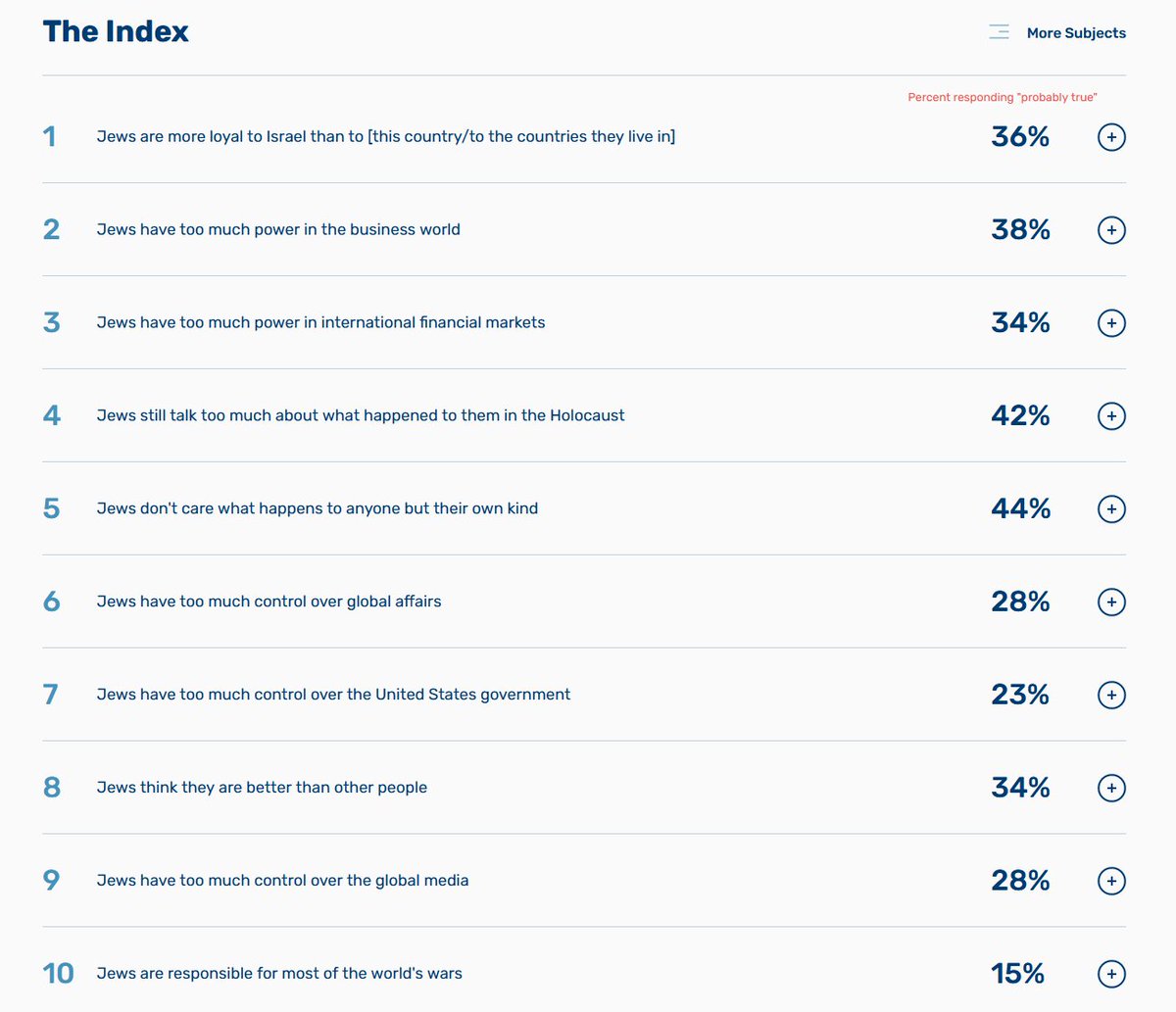
But before diving deeper, let’s look at a survey data of Russians in 2023: Nearly 30 million Russians harbour antisemitic attitudes, and 15% of those surveyed believed that “Jews were responsible for most of the world’s wars.” 38% think that the Jews have... 3/19
...“too much power in the business world”. There were around 2 million Jews in the USSR, approximately 880,000 of those were based in Russia. Half a million Jews had left the country by the time of its collapse, and by 2021, there were just 83,000 Jews remaining in Russia. 4/19
In 2018, Russian Levada Center noted that Russian Jews believed open antisemitism was falling in the country, but that it was artificially suppressed by the senior leadership openly pursuing a more pro-Israel position. They also felt that antisemitism… 5/19
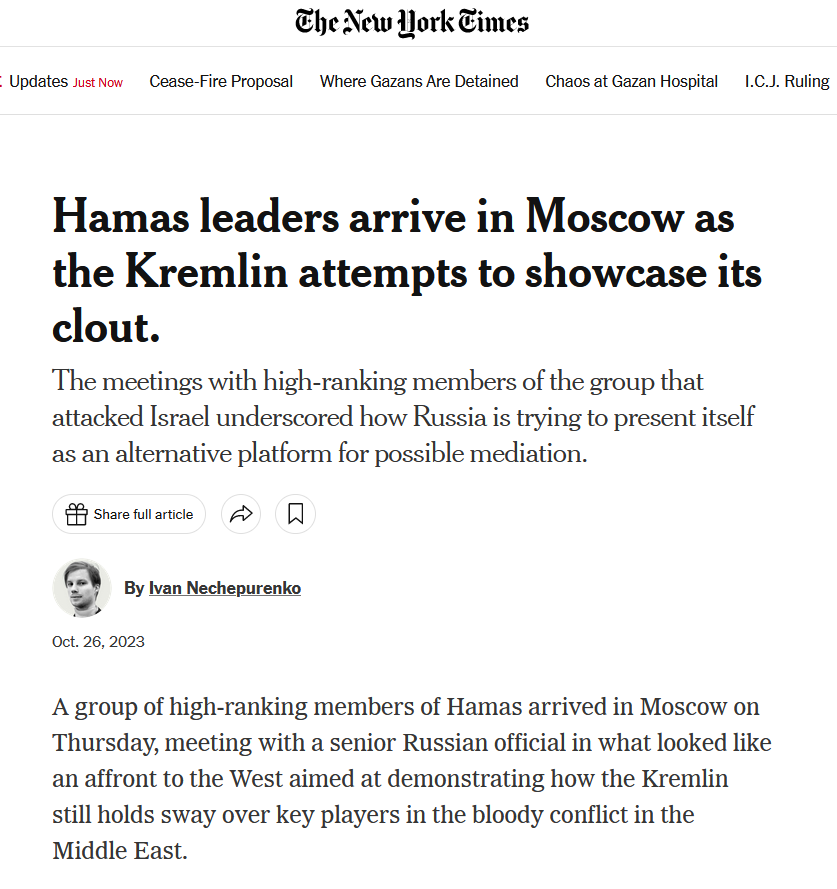
…would become more open if Russia’s senior leadership changed its public position on Israel. After the Oct 2023 Hamas terrorist attack, the Kremlin did exactly this: they labelled Israel and the US as an aggressor instead, even welcoming Hamas leaders to visit Moscow. 6/19
After Oct 2023, Russia also had a surge in antisemitic attacks. For example, in Oct 2023, Russians attacked Jewish people at the Makhachkala airport. The pogrom was naturally later blamed on “foreign actors”, “miscreants” and - you guessed that right - Ukrainians. 7/19
All this didn’t go unnoticed in Israel – prominent politician and Likud member Amir Weitmann blamed Russia for supporting Hamas during an interview on RT, stating that “Russia will pay the price” for “supporting the enemies of Israel”. 8/19
But at the same time, the Kremlin is actively spreading age old antisemitic tropes and conspiracy theories of “Zionist globalist elites taking over the world”. These tropes and stories, like the Protocols of the Elders of the Zion and Golden Billion, originate from Russia. 9/19
After Feb 2022, Russia has tried to undermine Western aid to Ukraine by vilifying the Ukrainian leadership, and especially Zelenskyy. Several high-ranking Russian officials have portrayed Zelenskyy as an “inauthentic Jew”, and the whole invasion was justified with… 10/19
…the need to “denazify” Ukraine. Putin has called Zelenskyy “a disgrace to the Jewish people”, drunk Medvedev stated he’d “lost his Jewish identity”, and, when asked about Zelenskyy’s Jewish identity, Lavrov even stated that Hitler “had Jewish blood, too”. 11/19
Putin even went as far as attempting to diminish the Nazi role in the murder of Jews in Ukraine during the Holocaust, by claiming it was done by the Ukrainians and “Banderites”, and that “even the SS troops didn’t consider it [the mass killings] possible.” 12/19
In Russia, the “Zionists” have been vilified by the genocidal Russian philosopher, Alexander Dugin, who claimed that the Crocus Hall attacks could’ve been “Zionists’ revenge” for Russia’s position on Gaza, while urging his followers to look for “Mossad’s fingerprints”. 13/19
But long before that, Russia’s massive disinformation and hybrid operation machinery started spreading antisemitism online to sow unrest and polarize societies in the West. For example, the FSB-controlled SouthFront fake news blog has spread several antisemitic tropes. 14/19
In Europe, the Kremlin has complemented these narratives by conducting hybrid operations, such as the antisemitic graffiti campaign in France, further provoking online discussions on “European antisemitism”. 15/19
As we’ve seen, the conflict in the Middle-East has polarized even the pro-Kremlin bloc, and this type of division is ideal for any kind of online propaganda and disinformation campaign. Now, it’s worth mentioning that the conflict is very real and should be addressed,… 16/19
…but the Kremlin is cynically using this dire situation to do what they do best – spreading false narratives and half-truths, thus dividing societies, who instead of focusing on foreign policy issues like the war in Ukraine, resort to infighting. 17/19
It’s also worth mentioning,that not everything comes from the Kremlin spin doctors. First of all, Iran and the CCP are also very active in spreading disinformation with their massive troll and bot farms. Second,many of these narratives are created by conspiracy theorists,… 18/19
…which are then amplified by the troll & bot farms. We should also remember that people have real concerns for example over inflation, identity politics, antisemitism, and immigration in both Europe and in the US, and that Russia uses them cynically to polarize societies. 19/19
When asked how Information warfare works, he simplified it through his own childrens fable, about the fox that ate the turtle. “Information war is purposefully training the enemy to remove its own shell” -SB Rastorguev (inventor of Information Warfare) 2/
Though Information warfare has been around for centuries, Rastorguevs philosophical approach differed from the approaches of Western strategists such as Libicki, Stein, Toffler & Ellul 3/
Sergey Rastorguev was a mad but brilliant scientist, strategist & mathematician obsessed with the occult & esoteric mysticism who strategized for genocidal population control & Russian domination of not only the world but the Universe. 4/
Russian foreign policy has been pursued through deception (Maskirovka) ever since the forming of the Foreign Bureau of the czarist secret police (Okhrana) in 1883. With Vladimir Lefebvre developing Reflexive Control for the KGB in the 60s 5/ archive.org/details/Kremli…
Modern information technologies change not only the usual lifestyle, they change the concept of good and evil, justice and sacrifice, and, in the end, they change the person himself, because they “use” the same person exclusively as an information self-learning system 6/
In 1996, Rastorguev used philosophy, mathematics & the occult to write the book: “Information Warfare, used on everything from election meddling to Qanon even predicting Elon Musk’s purchase of Twitter, Donald Trump & Ukraine War 7/
Rastorguev was an FSB Colonel obsessed with Russian Cosmism & pan-Slavism. Despite his intellectual exterior, working as a professor he was paranoid delusional & obsessed with genocide. Believing that Ukrainians were diseased rats that needed to be reprogrammed or exterminated 8/
In 97 he predicted the internet would make the US election process susceptible to outside influence. His work strategized how to infiltrate its top institutions, control influential people & corrupt the media. 9/ warsawinstitute.org/russian-interf…
Americans have an outdated concept of warfare, its not about boots on the ground or the military industrial complex. Russia’s use of manipulated information & alternating reality creating soft power, forming Russian led, multi-national Fascist World Orderl youtube.com/watch?v=78UlC_…
Social Media & open information would weaken free societies like the US and shift global power to authoritarian institutions like Russia. To use Vilfredo Pareto theory we are now changing the power dynamic from Lions (The West) to Foxes (Russia/China) 11/
Vladislav Surkov famously stated that the Wests biggest weakness is their citizens demand for morality & ethics in geopolitics + the profiting off of information (medias greed). the internet has made it possible to alter & split the Wests info sphere 12/ ft.com/content/1324ac…
Surkov was influenced by Rastorguevs take on Chaos Theory, stating Russias current geopolitical strategy is to create as many wars globally as possible, as Russia benefits from chaotic world order, Because by definition Chaos ALWAYS expands 13/ altanalyses.org/en/2021/11/28/…
Modern warfare is fought in the mind, the battlefield has changed. In 2006 Putin revealed that invasion of America has already begun, “Our responses must be based on intellectual superiority, they will be asymmetric, and less expensive” 14/ sof.news/io/paper-evolu…
In 2012 Igor Matskevich the former head of Cryptography & Informatics for FSB started a private company called ITERANET, developed software for SVR to automatically disseminate information in large social networks, manage Internet communities in order to influence public opinion
Has the US already lost the war? To quote Rastorguev from his 1998 book “Informatsionnaya Voyna “By the time truth is revealed, our work will be done, and the truth (reality) will already be rewritten 16/ darkreading.com/cyber-risk/a-r…
Rastorguev was first & foremost a mathematician, who called his work existential mathematics. He developed an algorithm allowing for full control of his enemy by influencing information patterns, defeating your enemy by splitting to 2 different realities researchgate.net/publication/33…'
Rastorguev believed the internet is a weapon of cyberwarfare, gone are a nations borders that protected them from invasion, a spy does not need to infiltrate a country to cause damage. All was needed was a (Social Media) account & an open & free society, cyberleninka.ru/article/n/the-…
He wrote the algorithm to use “Elections to power” as a way to achieve geopolitical goals: “If you want to destroy a rich and strong country help a local thief come to power. That is all you need. All the rest they will do by themselves, with their own hands.” (Rastorguev 1999)
Rastorguev’s basic principle of an information weapon is that the adversary has all the necessary resources for self-destruction. He proved the easiest way to destroy your enemy is to reprogram the self-learning systems & promote “do my own research”.
The Gerasimov Doctrine in 2013 detailed the Hybrid warfare strategy based on Rastorguev’s work announcing a new a new front against the West has begun. The truth no longer matters. Attempts to suppress fake news is labeled as anti-Free speech & hypocrisy politico.com/magazine/story…
A successful information warfare attack started in 2014 to counteract Maidan & to justify the invasion of Crimea. “Banderivtsy could storm into Crimea”, “Russia is just defending itself from NATO aggression, “de-Nazification” are still being used today. files.ethz.ch/isn/181102/PW4…
Rastorguev’s books examined how to manipulate the mind with real and latent threats, and how to model algorithms that define human behavior. Humans, like computers, can have a ‘virus’ inserted in their information system (reasoning process)
According to his mathematical formulas, a human information virus (dubbed a “psycho virus”) may be inserted - suggestive influence to alter or mask objective reasoning. He went author dozens of more books. To this day NONE of his work (listed below) has been translated to English
Before he died he published “Theory Of Egregors” occult term for the energy & power of “group-think” that manifests belief/faith in organized religion & cults. Proving that by creating a “Church Of (Dis)Information” you could control the masses. narapetrovic.com/society/we-are…
This theory is confirmation of the Noosphere, which both Putin & Elon are big believers in. Both obsessed with immortality & control, which the Russia2045 Initiative is making a reality, by transferring consciousness into a digital Avatar by the year 2045. newatlas.com/avatar-project…
Nikolai Federov, considered the creator of “Russian cosmism,” explored ideas of space travel and scientifically-engineered immortality through the lens of Christian mysticism back in the mid 19th century. atlasobscura.com/articles/what-…
With Elons Neuralink & transhumanism a reality, it makes the purchase of Twitter understandable as Twitter in itself is an organism of thought, a Noosphere. Elons goal of connecting his immortal consciousness to an AI, would make him in a sense, GOD. turingchurch.net/pigs-in-cybers…
Sounds like a bunch of crazy conspiracy nonsense right? Well, Putin’s top strategist & Chief of Staff Anton Vaino is a known Cosmist occultist who invented a way to monitor global consciousness through his Nooscope was it all predicted by Rastorguev? END abcnews.go.com/International/…
Meet the former Front Organisation "The World Peace Council": Founded in 1949 by the Soviet Cominform, the World Peace Council (WPC) acted as a Soviet front, spreading propaganda and influencing global peace movements. It was accused of spreading disinformation, infiltrating organizations, and backing Soviet foreign policy. It is still around today. Soviet Active Measures (1984) link: youtube.com/watch?v=ALfDhs…
In the digital age, the tactics of manipulation have evolved, but the underlying strategies remain the same. Active measures. Active Measures (2018) youtube.com/watch?v=3lTB94…
With social media as their new playground. These tactics are like a mirror, reflecting and amplifying existing beliefs to create distorted realities. By exploiting cognitive biases, these old strategies remain highly effective in today’s digital society, leading to increased polarization and erosion of trust. the great hack (2019) netflix youtube.com/watch?v=y26NQd…
Missing some tweets in this thread? Or failed to load images or videos? You can try to .
‼️ Listen carefully. This is the opinion not just of Russian actor Okhlobystin, but also of Russia's leaders and Russians poisoned by propaganda: "Ukraine should not exist. Ukrainians are Russians. But if they consider themselves Ukrainians, they are Nazis." As Putin and Medvedev have repeatedly said: for Russia, any Ukraine would be "nationalist" because from his - and Putin's - point of view, the very existence of a sovereign Ukrainian state is nationalism. Any Ukrainian is a "nationalist/Nazi" for them. Their goal is for Ukraine and Ukrainians to cease to exist. This should be clearly understood when talking about "negotiations" with Russia. Even Ukrainians from already occupied territories and with "correct" views will be persecuted.
What is Ruscism.? Ruscism differs from other forms of fascism, racism, and nationalism by its extreme cruelty, both towards humans and nature. While sharing some similarities with other totalitarian ideologies, ruscism is distinct in its unique blend of Russian cultural heritage, ultra-nationalism, and authoritarianism. it is a complex and multifaceted ideology, characterized by its extreme nature, totalitarian ambitions, and roots in Russian history and culture. Video by: youtube.com/@Militarnyi
Runet: Russia's Quest for a Digital Iron Curtain Russia harbors ambitions of creating a sovereign internet, dubbed "Runet," isolated from the global web. This digital fortress would operate under strict Russian control, mirroring the tightly censored online environments of China and North Korea. Moscow has already constructed the foundational elements of Runet, developing homegrown alternatives to dominant Western platforms. VKontakte (VK) serves as a multifaceted social media behemoth, while Yappy and Fiesta mimic TikTok and Instagram respectively. Rutube, Odnoklassniki, and Yandex provide Russian-based alternatives to YouTube, Facebook, and Google. Beyond platform development, Russia possesses the technical prowess to sever ties with the global internet. A successful test in 2020, during which the entire country was briefly disconnected, demonstrated this capability. By controlling internet exchange points and manipulating data traffic, Russia can effectively isolate Runet. To further solidify its control over online activity, Russia has implemented bans on VPNs and Tor, tools commonly used to circumvent internet censorship. These restrictions aim to prevent citizens from accessing information and services outside of the government-controlled digital sphere. The ultimate goal of this digital isolationism is to exert unparalleled control over online content and data within its borders.
The Cyberpress Research Team made a significant discovery with the Massive X (Formerly the Twitter) Database. This leaked database contains a massive amount of data, totaling 9.4GB, and has exposed almost 200 million records from a most recent Twitter data breach.
The breach, sourced from a Twitter (X) database or scrape, represents one of the largest exposures of user data in recent times.
The leak exposes users to various threats, including phishing attacks, identity theft, and social engineering schemes. With the vast amount of personal information available, malicious actors can exploit this data to compromise further accounts and systems linked to the affected email addresses.
The thread from leaked Twitter database on a well-known hacking forum for data leaks and breaches, titled “9.4GB Twitter Leaked Database—The Exposure of Over 200 Million Records Containing Email Addresses, Names, and Twitter Account Details,” highlights the severity and scale of this breach.
To release this massive Twitter database exclusively, the user named as “michupa” created a new account on the data leak forum on July 7, 2024.
Data leak forum users posted details about the Twitter database with a downloadable link. (Source: cyberpress.org)
We have found a total of 10 files, each containing a substantial amount of data, specifically 1 GB. These files are identified by unique names of the following.
Twitter_Full_b1nd.net.7z.001
Twitter_Full_b1nd.net.7z.002
Twitter_Full_b1nd.net.7z.003
Twitter_Full_b1nd.net.7z.004
Twitter_Full_b1nd.net.7z.005
Twitter_Full_b1nd.net.7z.006
Twitter_Full_b1nd.net.7z.007
Twitter_Full_b1nd.net.7z.008
Twitter_Full_b1nd.net.7z.009
Twitter Leaked database files hosted in the Cloud (Source: Cyberpress.org)
Due to its public availability, we can observe that forum users are already accessing the files several times that contains the following data.
Email addresses
Names
Twitter account details
Email addresses associated with Twitter accounts can be used for phishing, spamming, or other malicious activities. The full names of X (Twitter) users and information about Twitter accounts, including usernames, profile information, and other details, can be used to identify individuals and potentially link them to other online profiles.
“The leaked database was obtained from a recent Twitter data breach and has been verified by Cyber Press Team to ensure the accuracy of the data. The breach is believed to have occurred most recently, although the exact date is not specified. The leaked data includes a wide range of information, making it a significant concern for privacy and security.”
Although the Cyber Press Team has verified the accuracy of the email addresses for several of the listed Twitter profiles, the complete data set has not yet been confirmed.
Whether or not your information is included in this data set is contingent upon whether your email address was compromised in previous data breaches.
It is still unclear how the hackers gained access, but the Cyber Press team has contacted Twitter to inform them of the data leak. We are now waiting for a response. We will update this article as soon as we receive a response from X.
Given this breach’s scale and potential impact, the Cyber Press team strongly advises users and organizations to implement the following measures promptly.
Change passwords and enable two-factor authentication (2FA) on Twitter accounts.
Be vigilant of suspicious emails or messages attempting to exploit the leaked information.
Monitor accounts for any unusual activity and report any incidents to Twitter support.
Review and strengthen data protection and security measures.
Conduct regular security audits to identify and address potential vulnerabilities.
Educate employees about the risks of phishing and social engineering attacks.
Cyber Press discovery of the 9.4GB Twitter database leak underscores the critical importance of robust cybersecurity practices and vigilance. As data breaches continue to pose significant threats, both individuals and organizations must remain proactive in safeguarding personal information and responding swiftly to such incidents. Cyber Press will continue to monitor the situation and provide updates as new information emerges.
Follow us on LinkedIn for Exclusive Security Research and Updates.
 Login
Login








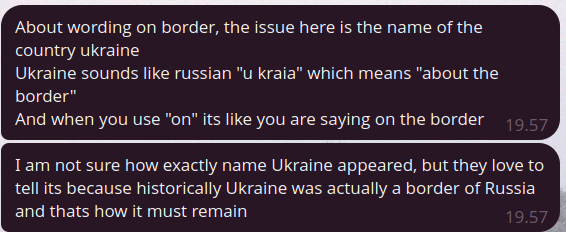
 ‼️ Listen carefully. This is the opinion not just of Russian actor Okhlobystin, but also of Russia's leaders and Russians poisoned by propaganda: "Ukraine should not exist. Ukrainians are Russians. But if they consider themselves Ukrainians, they are Nazis." As Putin and Medvedev have repeatedly said: for Russia, any Ukraine would be "nationalist" because from his - and Putin's - point of view, the very existence of a sovereign Ukrainian state is nationalism. Any Ukrainian is a "nationalist/Nazi" for them. Their goal is for Ukraine and Ukrainians to cease to exist. This should be clearly understood when talking about "negotiations" with Russia. Even Ukrainians from already occupied territories and with "correct" views will be persecuted.